The Geographical and Climate of Barbados: Barbados is located on the boundary between the South American and Caribbean tectonic plates. The island typically experiences two distinct seasons: the "rainy season," which lasts from June to December, and the "dry season," which runs from December to May. During the dry season, average temperatures range from 21 to 31 °C (70 to 88 °F). In contrast, between June and November, temperatures range from 23 to 31 °C (73 to 88 °F).
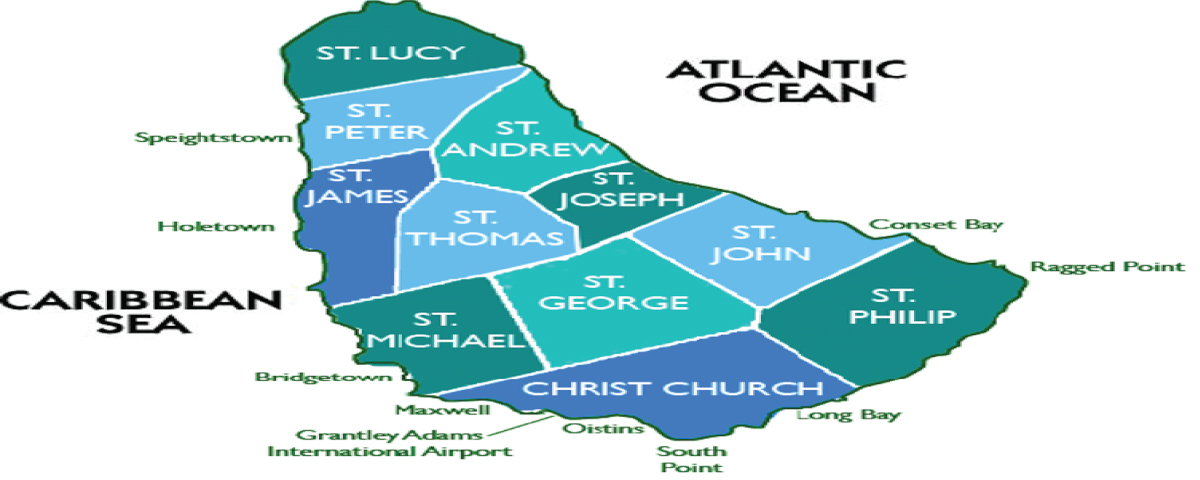
Barbados is divided into 11 parishes, which serve as its main geographic and cultural regions. While they are occasionally likened to "states" or "provinces," Barbados functions as a unitary state. This means that the parishes do not have independent governments or legislative power like states in larger countries. Instead, they primarily serve historical, geographic, and administrative purposes.
Parishes List of Barbados
- The Parish of Christ Church (Christ Church)
- The Parish of Saint Andrew (St. Andrew)
- The Parish of Saint George (St. George)
- The Parish of Saint James (St. James)
- The Parish of Saint John (St. John)
- The Parish of Saint Joseph (St. Joseph)
- The Parish of Saint Lucy (St. Lucy)
- The Parish of Saint Michael (St. Michael)
- The Parish of Saint Peter (St. Peter)
- The Parish of Saint Philip (St. Philip)
- The Parish of Saint Thomas (St. Thomas)
What Are Parishes in Barbados?
Parishes in Barbados function more like districts or regions rather than completely independent political units. This system has its roots in the island's colonial history under British rule, when the Church of England significantly influenced community organisation. Each parish is typically centred around a parish church, which serves as a focal point for local identity.
How Parishes Compare to States or Provinces?
While the comparison helps in understanding, there are key differences:
- Government: No independent government | Have their own governments
- Laws: Governed by national laws | Can make regional laws
- Purpose: Geographic & administrative | Political & administrative
- Autonomy: Very limited | Often significant